

Author Name: Dr. Sandra Thompson
Fluoride varnish is a highly concentrated, professionally applied fluoride coating that is brushed directly onto a child’s teeth during a dental visit. Once applied, the varnish hardens on contact with saliva, forming a protective layer that slowly releases fluoride into the enamel over several hours.
While both fluoride varnish and fluoride toothpaste contain fluoride, they serve very different roles in a child’s oral care routine:
Fluoride toothpaste
- Used daily at home
- Contains a low concentration of fluoride
- Helps maintain enamel strength with regular brushing
- Rinsed away shortly after use
Fluoride varnish
- Applied by a dental professional
- Contains a higher, controlled concentration of fluoride
- Stays on teeth for hours instead of minutes
- Provides long-lasting enamel protection
One of the biggest advantages of fluoride varnish is its ability to remain on the tooth surface much longer than gels, foams, or rinses. This is because:
- The varnish has a sticky resin base that bonds to enamel
- It hardens quickly when exposed to saliva
- It does not require trays or prolonged sitting time
- Children can swallow normally without risk
Safety is a common concern for parents, and fluoride varnish is considered one of the safest fluoride treatments available for kids. Pediatric dentists carefully control both the amount applied and the frequency of treatment based on a child’s age, weight, and cavity risk.
Key safety facts parents should know:
- Only a small amount of varnish is used per application
- The fluoride is designed for topical use, not ingestion
- The varnish hardens quickly, reducing swallowing risk
- It meets strict pediatric dental safety guidelines
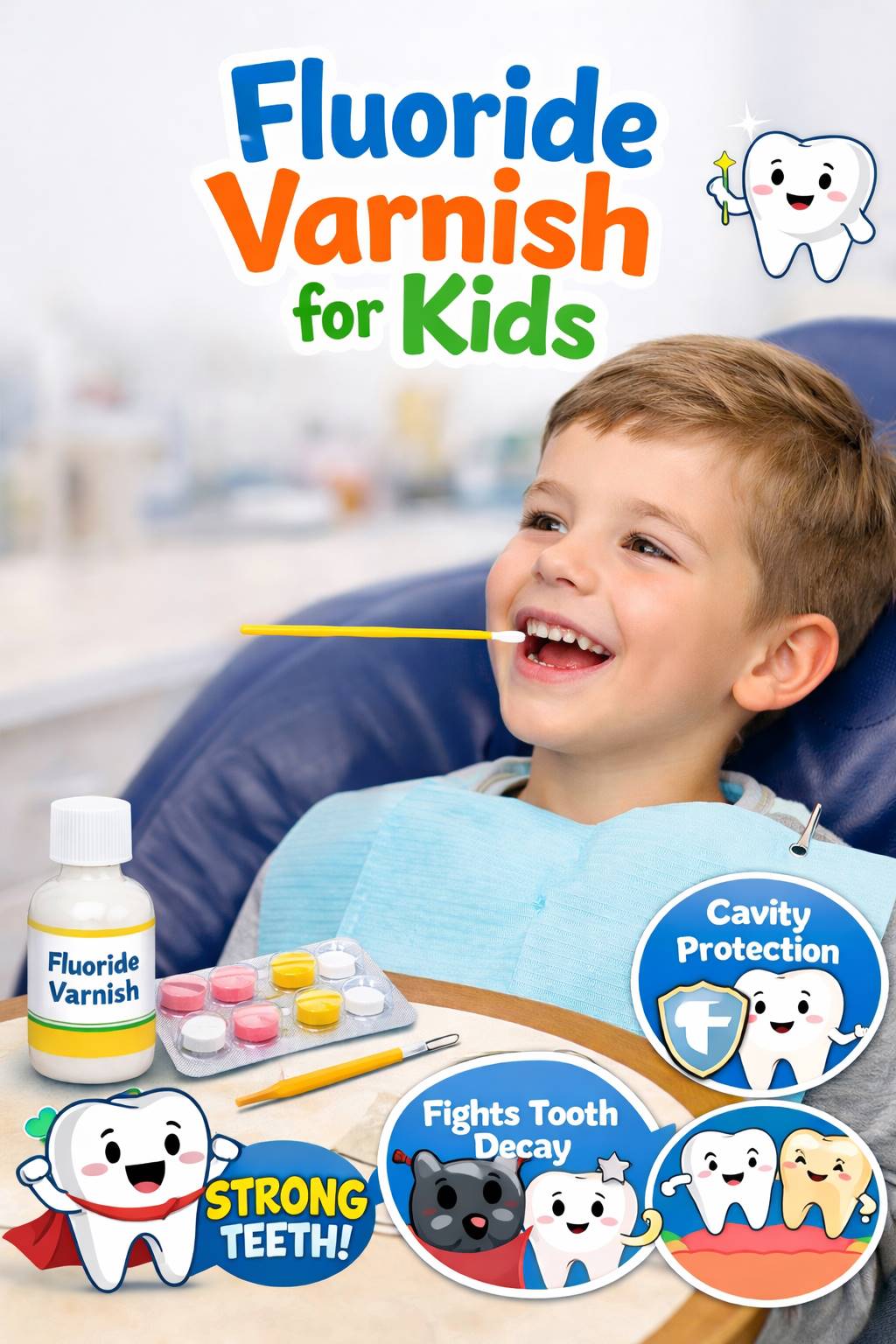
Every day, children’s teeth are exposed to acids from foods, drinks, and plaque bacteria. These acids can gradually weaken enamel, making teeth more vulnerable to decay. Fluoride varnish helps by:
- Bonding directly to the enamel surface
- Delivering fluoride deep into weakened areas
- Making enamel harder and more acid-resistant
In the earliest stages of tooth decay, damage may not yet be visible as a cavity. These early “white spot” areas indicate mineral loss - but they can often be reversed with fluoride varnish.
Fluoride supports the natural remineralization process, helping enamel regain lost minerals before a cavity forms. When applied regularly, fluoride varnish can stop early decay from progressing, reducing the need for fillings or more invasive treatments later.
Tooth sensitivity in children is often caused by enamel thinning or exposed dentin. Fluoride varnish helps relieve sensitivity by:
- Sealing microscopic pores in the enamel
- Strengthening weak tooth surfaces
- Reducing nerve response to hot, cold, or sweet foods
Even with good brushing habits, cavities can develop slowly over time - especially in areas that are hard to clean, like grooves in molars or along the gumline. Fluoride varnish works continuously to:
- Inhibit acid-producing bacteria
- Slow the breakdown of tooth structure
- Reduce the speed at which cavities form
One of the biggest benefits of fluoride varnish is its long-lasting action. After application:
- The varnish hardens quickly and stays on teeth for hours
- Fluoride continues releasing into enamel over time
- Teeth remain protected even after eating and drinking
The fluoride varnish application is simple and fast. After the dentist or hygienist gently cleans and dries your child’s teeth, the varnish is painted on using a small, soft brush. There is no pressure, no vibration, and no sharp instruments involved. Most children barely notice the application, and many describe it as feeling similar to having teeth “painted.”
Unlike restorative dental treatments, fluoride varnish requires no drilling, numbing, or injections. It is a purely preventive procedure that strengthens enamel without altering the structure of the tooth. Because there is no discomfort, fluoride varnish is suitable even for toddlers and children who may feel nervous during dental visits.
The actual application of fluoride varnish usually takes less than one minute. Including preparation time, the entire process is typically completed in just a few minutes. This makes it ideal for busy families and for children who have difficulty sitting still for longer procedures.
After the varnish is applied, children may notice:
- A slightly sticky or smooth feeling on their teeth
- A mild taste that fades quickly
- Teeth that appear temporarily dull or slightly yellowed (this disappears once brushing resumes)
To ensure the fluoride varnish works as effectively as possible, dentists usually recommend a few simple after-care steps:
- Avoid brushing or flossing until the next morning
- Stick to soft foods for the rest of the day
- Avoid very hot or hard foods for a few hours
- Drinking water is allowed
For most children, pediatric dentists recommend fluoride varnish two to four times per year. This schedule typically aligns with routine dental checkups and cleanings, making it easy to maintain consistent protection without additional appointments. Regular applications help reinforce enamel and provide ongoing defense against cavities as teeth grow and change.
Higher-Frequency Needs for Cavity-Prone Kids
Some children benefit from more frequent fluoride varnish applications - often every three months. Kids who may need this higher level of protection include those who:
- Have a history of frequent cavities
- Struggle with brushing or flossing consistency
- Wear braces or orthodontic appliances
- Have enamel defects or early signs of decay
Risk Factors That May Require More Frequent Application
Pediatric dentists carefully evaluate risk factors before recommending how often fluoride varnish should be applied. Common risk factors include:
- Dry mouth, which is more common in desert climates
- Frequent snacking or sugary drink consumption
- Deep grooves in molars that trap food and bacteria
- Medical conditions or medications that affect saliva flow
No two children have the same oral health needs. Pediatric dentists personalize fluoride varnish schedules by considering:
- Age and stage of tooth development
- Oral hygiene habits at home
- Previous cavity history
- Dietary patterns and lifestyle factors
Role of Routine Checkups in Timing Applications
Routine dental visits are key to determining when fluoride varnish should be reapplied. During checkups, the dentist assesses enamel strength, checks for early signs of decay, and monitors how well previous treatments are working. These evaluations help ensure fluoride varnish is applied at the right time to maintain continuous protection between visits.