

Author Name: Dr. Sandra Thompson
A knocked-out tooth, medically known as an avulsed tooth, occurs when a tooth is completely displaced from its socket due to trauma or impact. This is different from a tooth that is loose, chipped, or pushed out of position, where the tooth remains partially attached to the gum and bone. An avulsed tooth is no longer connected to its blood supply, making it especially vulnerable to damage.
Knowing whether a knocked-out tooth is a baby tooth or a permanent tooth is critical in an emergency. Most children begin getting permanent teeth around age 6, with the process continuing into the early teen years. The key distinction is that baby teeth should never be replanted, while permanent teeth may be saved if handled and treated quickly. Replanting a baby tooth can damage the developing permanent tooth underneath, potentially leading to problems with eruption, alignment, or enamel formation later on. In contrast, a permanent tooth has a chance of being successfully reinserted if proper steps are taken right away.
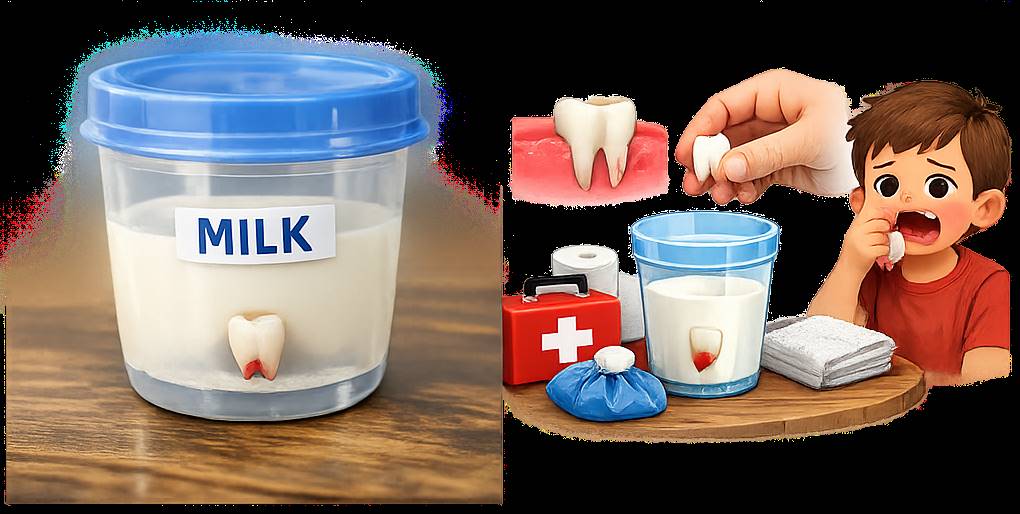
Your reaction sets the tone for your child. Staying calm helps reduce panic and makes it easier to act effectively. A knocked-out tooth is extremely time-sensitive, with the best chances of saving a permanent tooth occurring within 30–60 minutes of the injury. The sooner you respond, the better the outcome.
Locate the tooth immediately. Always handle it by the crown (the chewing surface), never the root. Touching the root can damage delicate cells needed for reattachment. Do not scrub, scrape, or remove any tissue attached to the tooth.
If the tooth is visibly dirty, rinse it gently with clean water or saline for a few seconds. Do not use soap, disinfectants, or chemicals, and do not soak the tooth. Gentle rinsing helps remove debris without damaging the tooth surface.
If you are certain it is a permanent tooth and your child can tolerate it, gently place the tooth back into the socket, ensuring it faces the correct direction. Have your child bite down softly on clean gauze to hold it in place. If replanting is painful or not possible, do not force it.
Place the tooth in milk, saline solution, or inside your child’s cheek (only if they are old enough not to swallow it). Avoid storing the tooth in plain water or wrapping it in tissue, as this can damage the tooth cells.
Certain actions can significantly reduce the chance of saving a knocked-out tooth. Do not scrub, brush, or attempt to sterilize the tooth, as this can damage the delicate cells needed for reattachment. Never allow the tooth to dry out, even for a short period, because dryness can quickly harm the root surface. Avoid delaying dental care every minute matters in an avulsion emergency.
If your child’s permanent tooth is knocked out, you should see a dentist immediately, ideally within 30 to 60 minutes. Many dental offices can handle avulsion emergencies and are best equipped to attempt tooth reattachment.
When you arrive, the pediatric dentist will first examine your child’s mouth and may take X-rays to assess damage to the tooth, socket, and surrounding bone. If the tooth can be saved, the dentist may gently replant it and secure it with a small, temporary splint to stabilize healing. Medications or antibiotics may be prescribed to reduce the risk of infection and manage discomfort. Follow-up visits are essential to monitor healing, nerve health, and tooth stability over time.
After a dental injury, focus on keeping your child comfortable and calm. Use a cold compress on the outside of the cheek for short intervals to help reduce pain and swelling. Over-the-counter pain relievers may be used if recommended by your dentist or physician, but avoid aspirin, as it can increase bleeding risk in children.
Yes, a permanent tooth can sometimes be saved if it is handled properly and treated quickly. Acting within the first 30 to 60 minutes greatly improves the chances of success.
A tooth has the best chance of survival if it is replanted or kept moist within one hour. The longer it stays dry, the lower the likelihood of saving it.
If the tooth cannot be located, see a dentist immediately. X-rays may be needed to ensure the tooth was not inhaled or lodged in the soft tissues.
In some cases, a replanted tooth may darken over time, which can indicate nerve damage. Ongoing dental monitoring helps address these changes early.