

Author Name: Dr. Sandra Thompson
A mild toothache may involve brief sensitivity to hot, cold, or sweet foods and often passes quickly. A severe toothache, however, is more intense and persistent, signaling a deeper problem. Signs of severe tooth pain in children include constant or throbbing discomfort, pain that disrupts sleep, eating, or school activities, and visible symptoms such as swelling of the gums or face, fever, or tenderness when touched.
Tooth Decay and Cavities
Untreated cavities are one of the most common causes of severe toothache in children. When decay is limited to the outer enamel, discomfort may be mild. However, if it progresses into the inner layers of the tooth, it can reach the nerve, causing sharp or throbbing pain. Tooth decay can advance quickly in children because their enamel is thinner and more vulnerable, especially with frequent snacking, sugary drinks, or inconsistent brushing.
Dental Infection or Abscess
A dental abscess is a pocket of infection that forms when bacteria reach the tooth’s pulp or surrounding bone. This type of infection often causes intense, constant pain and pressure. Parents should watch for warning signs such as facial or gum swelling, a bad taste in the mouth, fever, or increased sensitivity. An abscess requires prompt professional care to prevent the infection from spreading.
Tooth Eruption or Impacted Teeth
As permanent teeth erupt, children may experience temporary soreness or pressure in the gums. This discomfort is usually mild and short-lived. Pain becomes abnormal if it is severe, persistent, or accompanied by swelling or fever, which may indicate an impacted tooth or infection rather than normal eruption.
Cracked, Broken, or Injured Teeth
Falls, sports injuries, or biting on hard objects can crack or break a tooth. Even small cracks may expose sensitive inner layers of the tooth, leading to significant pain, especially when chewing or exposed to temperature changes. Dental trauma should always be evaluated, even if damage appears minor.
Gum Infections or Inflammation
Food trapped between teeth, plaque buildup, or poor oral hygiene can irritate the gums and cause inflammation and pain. While mild gum soreness can also occur during teething, persistent redness, swelling, or pain may signal an infection that needs professional attention rather than routine teething discomfort.
Provide Safe Pain Relief
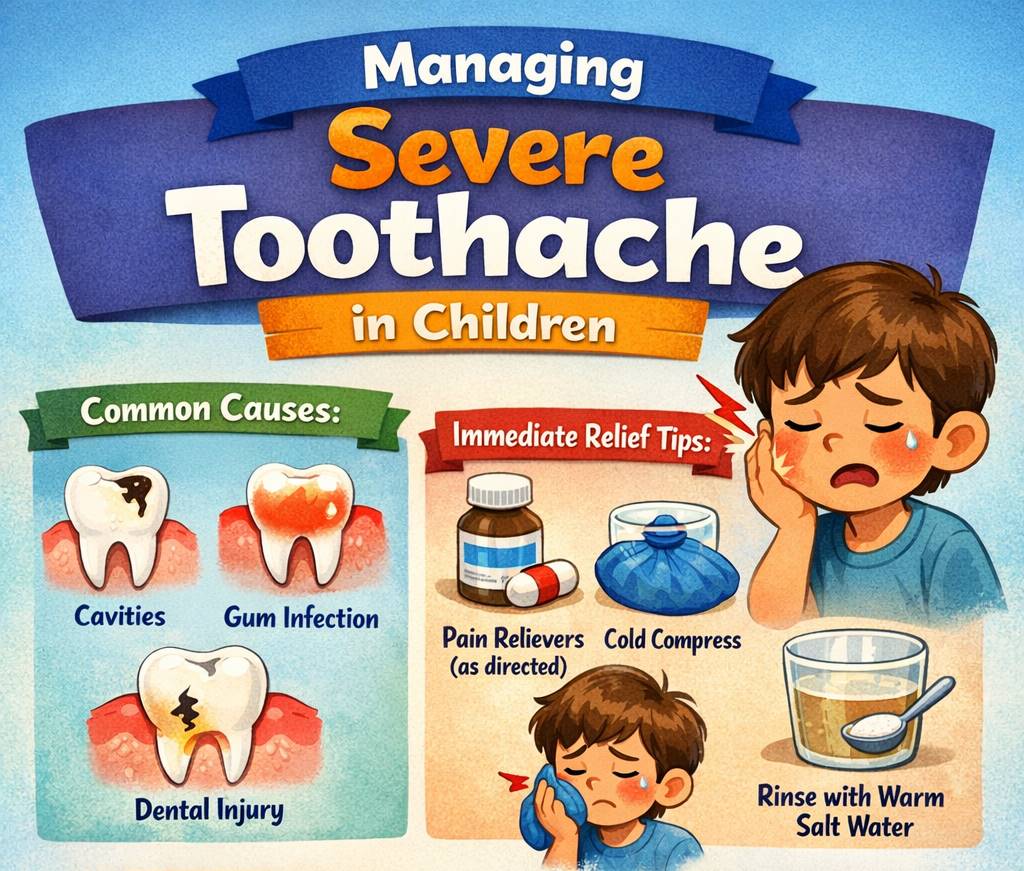
When a child is experiencing a severe toothache, safe pain management is the first priority. Parents can use child-appropriate pain relievers such as acetaminophen or ibuprofen to help reduce discomfort. It is essential to follow dosage instructions carefully based on the child’s age and weight. Giving more than the recommended amount or using medications not approved for children can be dangerous and should always be avoided.
Reduce Swelling and Discomfort
Swelling often makes tooth pain feel worse. Applying a cold compress to the outside of the child’s cheek for short intervals can help numb the area and reduce inflammation. Keeping the child upright, especially during rest or sleep, may also lessen pressure and throbbing associated with severe tooth pain.
Keep the Area Clean
Maintaining oral hygiene can prevent irritation from worsening. If the child is old enough, gentle rinsing with warm salt water can soothe the gums and help reduce bacteria. Parents can also carefully remove trapped food between teeth using floss, taking care not to injure the gums.
What Home Care Can and Cannot Do
Home care measures provide temporary relief only. While they can ease pain and swelling, they do not treat the underlying dental problem. Professional dental care is necessary to diagnose the cause and provide proper treatment.
Do Not Place Aspirin on the Tooth or Gums
Aspirin should never be placed directly on a child’s tooth or gums. This common myth can cause chemical burns to the soft tissues and does nothing to address the underlying dental problem causing the pain.
Do Not Ignore Swelling, Fever, or Worsening Pain
Facial swelling, fever, or increasing pain are warning signs of a possible infection. Ignoring these symptoms can allow the condition to worsen and may lead to more serious health complications.
Do Not Rely on Home Remedies as a Long-Term Solution
Home remedies may temporarily ease discomfort, but they cannot treat cavities, infections, or dental injuries. Depending on them instead of seeking professional care can delay proper treatment.
Do Not Delay Dental Care
Waiting and hoping the pain will resolve on its own can lead to more severe issues. Prompt dental evaluation is essential to relieve pain safely and prevent long-term damage.
Parents should contact a pediatric dentist right away if a child’s tooth pain lasts longer than 24 hours or continues to worsen despite home care. Swelling of the face, jaw, or gums is a serious warning sign and may indicate infection. Fever, a bad taste in the mouth, or pus around a tooth are additional signs that urgent dental care is needed.
During the dental visit, the pediatric dentist will begin with a thorough examination of your child’s mouth and may take X-rays to see areas that are not visible to the eye. Pain management is a key focus throughout the visit, with child-friendly techniques used to keep your child comfortable during treatment and guidance provided for managing soreness afterward.
Preventing severe toothaches starts with strong daily oral care habits. Children should brush twice a day with fluoride toothpaste and floss regularly to remove plaque and food particles that can lead to cavities. Limiting sugary snacks and drinks is also essential, as frequent sugar exposure increases the risk of tooth decay. Routine dental checkups allow dentists to catch small problems early, before they turn into painful issues. Fluoride treatments help strengthen enamel, while dental sealants provide an added layer of protection against cavities on the chewing surfaces of back teeth. For children involved in sports or active play, wearing a properly fitted mouthguard can help prevent dental injuries that may cause sudden tooth pain. Consistent prevention reduces the risk of both dental emergencies and long-term oral health problems.
Can a toothache go away on its own?
A mild toothache may temporarily improve, but severe or persistent pain rarely resolves without treatment. Even if the pain fades, the underlying problem may still be present and can return worse.
Is a severe toothache always an infection?
Not always. Severe pain can also be caused by deep cavities, dental injuries, cracked teeth, or erupting teeth. However, infection is a common cause and should always be ruled out by a dentist.
What if my child’s toothache happens at night?
Nighttime toothaches are often more noticeable because lying down increases blood flow to the head. If pain wakes your child or prevents sleep, dental care should be scheduled as soon as possible.
Can baby teeth cause serious pain?
Yes. Baby teeth have nerves and can develop cavities or infections just like permanent teeth. Ignoring pain in baby teeth can lead to infection, discomfort, and problems with future adult teeth.