

Author Name: Dr. Sandra Thompson
Key Takeaways
- A pre-visit checklist helps parents prepare children for a dental appointment and reduces anxiety.
- Providing accurate medical history helps a pediatric dentist deliver safe and effective treatment.
- Preparing children mentally improves cooperation during dental care visits.
- Watching for symptoms such as tooth pain, swelling, or sensitivity helps dentists diagnose problems quickly.
- Early dental visits support strong oral hygiene habits and prevent cavities.
- A qualified Centennial Hills pediatric dentist can monitor tooth development and guide preventive care.
Preparing for a dental visit improves the overall experience for both parents and children. Pediatric dental visits involve evaluation, preventive care, and education. When families arrive organized and informed, the dentist can focus on delivering effective care rather than collecting missing information.
Children also feel calmer when they understand what to expect. Anxiety often comes from uncertainty. Explaining the visit and creating a simple routine before appointments helps children feel more comfortable.
A prepared visit allows the dentist to focus on prevention, identify dental concerns early, and guide families toward healthy habits that protect developing teeth.
How Preparation Reduces Dental Anxiety
Many children feel nervous before visiting a dentist for children. The sounds, equipment, and unfamiliar environment can be intimidating.
Parents can help reduce anxiety by:
- Talking about the visit in a calm and positive way
- Explaining that the dentist helps keep teeth healthy
- Avoiding negative language about pain or procedures
A supportive approach helps children build trust in dental professionals and view appointments as a normal part of health care.
Why Dentists Need Accurate Information
Providing complete information allows a Centennial Hills kids dentist to make safe treatment decisions.
Important details include:
- Current medications
- Known allergies
- Medical conditions such as asthma or diabetes
- Previous dental treatments
These details affect treatment choices, especially if procedures require numbing agents, sedation, or antibiotics.
The Role of Preventive Dental Care
Routine visits play a central role in preventive dental care for children. During regular checkups, the dentist can detect early signs of tooth decay, gum inflammation, and developmental concerns.
Preventive care also helps children learn proper brushing habits and understand the importance of oral hygiene. Early education often prevents serious dental problems later.
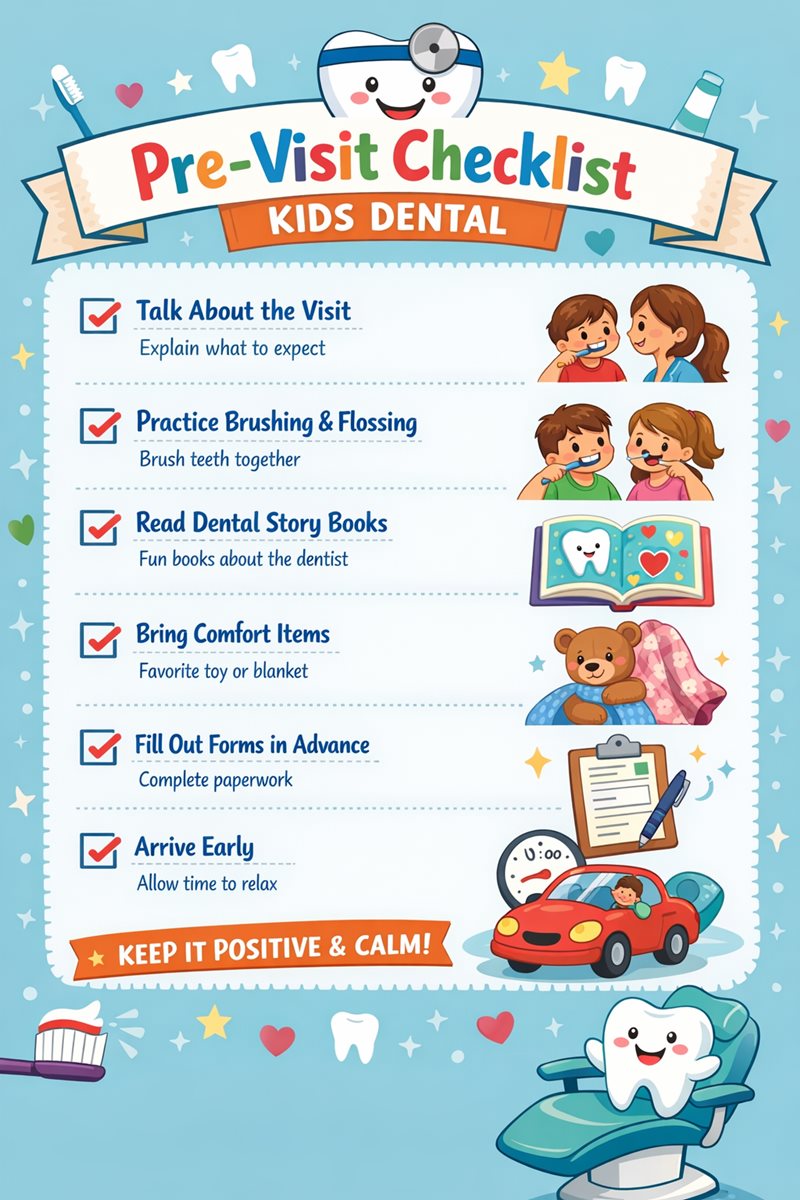
A structured pre-visit checklist ensures parents arrive prepared and the appointment runs efficiently. This checklist includes both practical preparation and health information.
Gather Medical and Dental History
Before leaving for the appointment, parents should review their child’s medical background.
Helpful information includes:
- Previous dental procedures
- Any past tooth injuries
- Known allergies to medications
- Current medications or supplements
If your child recently experienced tooth pain, swelling, or sensitivity, note when the symptoms began. These details help the pediatric dentist evaluate potential causes.
Bring Insurance and Identification
Administrative preparation helps avoid delays during the visit.
Parents should bring:
- Dental insurance information
- Identification for registration
- Previous dental records if transferring from another clinic
If your child has visited another dental office before, bringing past records allows the Centennial Hills pediatric dentist to compare dental development over time.
Prepare Questions for the Dentist
Dental visits are an opportunity for parents to ask important questions about their child’s oral health.
Common topics include:
- Proper brushing techniques for children
- Recommended toothpaste and fluoride use
- Thumb sucking or pacifier concerns
- Diet and cavity prevention
Preparing questions ahead of time ensures you receive useful guidance during the appointment.
Some dental symptoms require prompt attention. Recognizing early warning signs helps prevent minor problems from becoming serious.
Parents should schedule a dental visit if their child experiences any of the following symptoms.
Tooth Pain or Sensitivity
Pain is one of the most common signs of tooth decay. Children may complain about discomfort when eating or drinking.
Possible warning signs include:
- Pain when chewing
- Sensitivity to cold drinks or sweets
- Avoiding certain foods
A dentist for children can determine whether the discomfort is caused by cavities, enamel damage, or gum irritation.
Swelling or Gum Redness
Healthy gums should appear pink and firm. Swelling, redness, or bleeding may indicate gum inflammation.
These symptoms can result from:
- Poor brushing habits
- Plaque buildup
- Early gum infection
A pediatric dentist can provide professional cleaning and guidance to restore healthy gum tissue.
Difficulty Chewing or Speaking
Problems with chewing or speech sometimes indicate bite alignment issues or jaw development concerns.
Parents should consult a Centennial Hills kids dentist if a child experiences:
- Trouble chewing certain foods
- Jaw discomfort
- Visible misalignment of teeth
Early evaluation allows dentists to monitor development and recommend orthodontic care if necessary.
Emotional preparation helps children approach dental visits with confidence. Parents play a major role in shaping how children view dental care.
A calm, supportive approach can significantly reduce fear.
Talk About the Visit in Positive Terms
Children often respond to the tone parents use when discussing medical visits.
Helpful strategies include:
- Explaining that the dentist checks and cleans teeth
- Describing the visit as a routine health check
- Avoiding words that may cause fear
When parents present dental visits as normal and helpful, children feel more comfortable during the appointment.
Practice Dental Habits at Home
Encouraging good oral hygiene for children before the visit prepares them for dental evaluations.
Parents should encourage:
- Brushing twice daily with fluoride toothpaste
- Gentle flossing when teeth touch
- Rinsing after sugary foods
Practicing these habits helps children understand the importance of dental care and makes professional cleanings easier.
Choose the Right Appointment Time
Scheduling the appointment at a suitable time improves cooperation during the visit.
Consider scheduling when your child is:
- Well rested
- Not hungry
- Not near nap time
Morning appointments often work best for younger children who feel more energetic and focused earlier in the day.
Understanding what happens during a pediatric dental appointment helps parents prepare children in advance.
Most visits include several routine steps designed to protect oral health.
Oral Examination
The dentist begins with a thorough oral examination.
During the exam, the dentist evaluates:
- Teeth for signs of cavities
- Gum health
- Jaw development
- Bite alignment
Early detection allows dentists to treat small problems before they become serious.
Professional Cleaning
Dental hygienists perform a professional dental cleaning to remove plaque and tartar.
Cleaning helps:
- Reduce bacteria that cause cavities
- Prevent gum inflammation
- Maintain healthy enamel
Children also learn the importance of proper brushing techniques during this process.
Preventive Treatments
Many pediatric dental visits include preventive treatments that protect developing teeth.
These may include:
- Fluoride treatments to strengthen enamel
- Dental sealants to protect cavity-prone molars
Guidance from Dr. Sandra Thompson
During the visit, Dr. Sandra Thompson provides personalized recommendations based on your child’s oral health.
Parents may receive guidance about:
- Improving brushing habits
- Reducing sugary snacks
- Monitoring tooth development
- Preventing cavities
Routine dental visits support healthy development and prevent common oral health problems.
Early monitoring allows dentists to detect issues before they require complex treatment.
Preventing Tooth Decay
Cavities remain one of the most common childhood health conditions. Regular dental visits help identify early tooth decay and treat it quickly.
Preventive care may include:
- Fluoride treatments
- Dental sealants
- Professional cleanings
Monitoring Tooth Development
Children’s teeth and jaws change rapidly during growth. A Centennial Hills pediatric dentist monitors these changes during routine visits.
Dentists track:
- Eruption of permanent teeth
- Spacing and alignment
- Jaw development
Early monitoring helps prevent orthodontic complications later.
Building Lifelong Dental Habits
Positive dental experiences during childhood shape lifelong attitudes toward oral health.
Children who feel comfortable at the dentist are more likely to maintain regular visits as adults. This habit protects overall health and prevents future dental problems.
Selecting a skilled pediatric dentist ensures children receive specialized care designed for developing teeth and growing smiles.
Training of Pediatric Dentists
A pediatric dentist receives advanced training focused on children’s dental health.
This training includes:
- Child behavior management
- Growth and development of teeth
- Pediatric dental treatments
This specialized knowledge allows dentists to treat children safely and effectively.
Child-Friendly Dental Environment
A welcoming dental environment helps children feel relaxed during visits.
Pediatric dental clinics often include:
- Child-friendly décor
- Smaller dental tools
- Staff trained to communicate with children
Benefits of a Local Centennial Hills Pediatric Dentist
Choosing a local Centennial Hills pediatric dentist provides convenience and continuity of care.
Local care makes it easier to:
- Schedule routine checkups
- Address urgent dental concerns
- Maintain long-term monitoring of dental development
Consistency also helps children build trust with their dental provider.
Parents should bring insurance information, identification, medical history details, and a list of medications. Previous dental records can also help the dentist understand past treatments.
Parents can reduce anxiety by explaining the visit in simple terms, maintaining a positive attitude, and avoiding language that suggests fear or pain.
Dental experts recommend scheduling the first dental visit by the child’s first birthday or when the first tooth appears.
Common pediatric dental problems include tooth decay, gum irritation, plaque buildup, and enamel sensitivity.
Most children benefit from dental visits every six months. Regular visits allow dentists to monitor development and provide preventive care.