

Author Name: Dr. Sandra Thompson
Silver Diamine Fluoride (SDF) is a liquid dental treatment used to stop cavities from getting worse. Pediatric dentists apply it directly to the affected area of the tooth using a small brush, and the process takes only a few minutes. There is no drilling, numbing, or discomfort, which makes it especially child-friendly.
SDF works in two main ways: it kills the bacteria that cause cavities and helps strengthen weakened tooth enamel. By doing this, it can slow down or completely stop the progression of tooth decay, helping preserve the tooth.
SDF is commonly recommended for children with early childhood cavities, very young kids who cannot sit still for longer treatments, anxious patients, and children with special healthcare needs. Its quick and gentle application makes dental care more accessible.
Unlike fillings or crowns, SDF does not remove tooth structure. Instead of repairing the tooth, it stabilizes decay, often delaying or avoiding more invasive procedures.
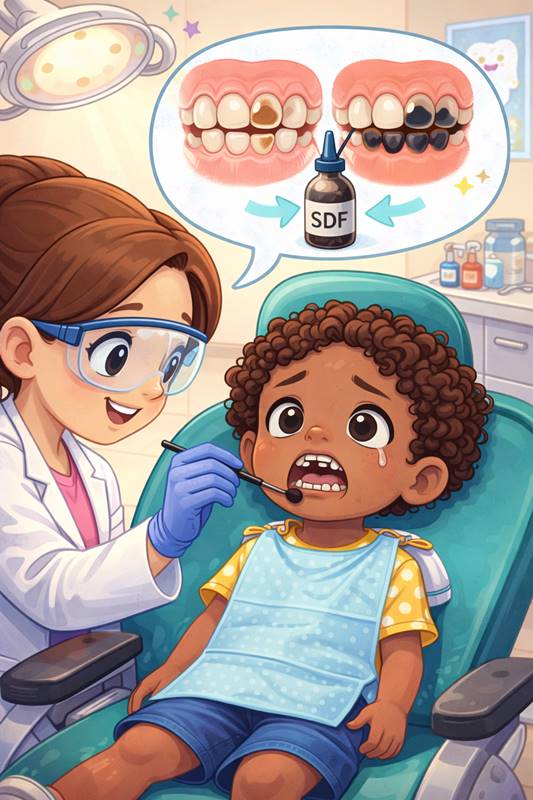
Silver Diamine Fluoride (SDF) is often recommended when a child has early cavities that have not progressed to the point where drilling or fillings are necessary. At this stage, SDF can help stop decay before it becomes more serious, protecting the tooth with minimal intervention.
SDF is also commonly used for cavities in baby teeth. Since these teeth play an important role in chewing, speech development, and guiding permanent teeth, preserving them even temporarily supports healthy oral development.
Let your child know what to expect in a gentle way. You might explain that the dentist will paint a special liquid on the tooth with a tiny brush and that it may feel a little wet or taste different, but it won’t hurt. Reassure them that the treatment is very quick and will be over before they know it. Encourage questions and answer honestly, but stay relaxed your calm tone helps your child feel safe and confident.
Next, the dentist will dry the tooth to prepare the surface. The SDF is then carefully applied using a small brush, much like painting a liquid onto the tooth. After application, there is a short waiting period to allow the solution to absorb and begin working. Because there is no drilling, numbing, or pressure involved, the procedure is very comfortable for most children. In many cases, the entire appointment takes only 5 to 10 minutes, making it easy even for young or anxious patients to tolerate.
Emotional Preparation
Your attitude plays a big role in how your child feels about the visit. Stay calm, confident, and upbeat when talking about the appointment children often mirror their parents’ emotions. Practicing sitting still at home for a few minutes can help younger kids feel more prepared. Reading age-appropriate books or watching short, friendly videos about going to the dentist can also make the experience feel familiar rather than intimidating.
Practical Preparation
Try to schedule the appointment at a time of day when your child is usually well-rested and cooperative, such as earlier in the morning. Make sure your child has eaten beforehand, since they may be asked not to eat or drink for a short time after the application. Dress your child in clothes you wouldn’t mind getting a small stain on, just in case the SDF comes into contact with fabric.
Setting Expectations
Let your child know that the treated tooth may turn dark, and explain that this color change means the medicine is working to stop the cavity and keep the tooth healthy.
Silver Diamine Fluoride permanently darkens the areas of the tooth where decay is present. This staining happens only in the weakened, decayed portion of the tooth healthy enamel is not affected. While the color change can be noticeable, it is actually a sign that the cavity has become inactive and is no longer progressing. Many pediatric dentists view this darkening as visual confirmation that the treatment is working.
Keep an eye on the treated tooth over the next few weeks. It should appear darker and remain firm, which indicates the cavity is inactive. If you notice pain, swelling, or changes in the surrounding gums, contact your dental office. Follow-up appointments are often scheduled every few months to monitor the tooth and determine if additional SDF applications or other treatment are needed.
For children with sensory sensitivities, pediatric dental offices can make accommodations such as dimmed lighting, quieter rooms, gentle communication, or allowing breaks when needed. It’s important to share any concerns, triggers, or past experiences with the dental team ahead of time so they can adjust their approach. Pediatric dental professionals are trained to support children with special healthcare needs and focus on creating a safe, respectful, and calming environment for every child.
Yes. Silver Diamine Fluoride has been used safely in pediatric dentistry for many years and is approved for use on children. Dentists apply it in very small amounts and carefully control where it goes.
No. The application is painless and does not involve drilling, needles, or numbing. Most children feel little to nothing during the procedure.
SDF works to stop decay, but it may need to be reapplied every few months, depending on the tooth and the child’s risk for cavities.
Possibly. SDF stops or slows decay, but some teeth may still need a filling or crown later for strength or appearance, especially as the child gets older.