

Author Name: Dr. Sandra Thompson
Key Takeaways
- Pediatric sedation dentistry helps children remain calm during dental procedures.
- Sedation may be recommended for children with anxiety, strong gag reflexes, or extensive treatment needs.
- Common options include nitrous oxide, oral sedation, and IV sedation.
- A qualified children’s dentist evaluates each child’s medical history before recommending sedation.
- Safety monitoring is always used during sedation procedures.
- Parents should follow pre-appointment instructions carefully for the safest outcome.
- Sedation allows children to receive necessary dental care without fear or trauma.
Dental visits can feel intimidating for young patients. Even simple procedures may cause fear or anxiety, especially if a child has had a previous negative experience.
Dental Anxiety in Children
Dental anxiety is common among children. Bright lights, unfamiliar tools, and new environments can feel overwhelming. Some children also worry about discomfort during treatment.
A Las Vegas kids dentist may recommend sedation when anxiety prevents a child from cooperating during dental care. Sedation helps children feel relaxed and reduces stress during treatment.
Difficulty Staying Still During Treatment
Dental procedures require precision. If a child moves suddenly, it may increase the risk of complications or make treatment longer.
Young children often struggle to stay still for extended periods. Pediatric sedation dentistry helps children remain calm and cooperative so treatment can proceed safely.
Complex Dental Procedures
Certain treatments require more time or involve multiple steps. Examples include:
- Dental crowns for children
- Tooth extractions
- Treatment of multiple cavities
- Pulp therapy for infected teeth
Sedation can help complete these treatments in one appointment while minimizing discomfort.
Children With Special Healthcare Needs
Some children have sensory sensitivities, developmental conditions, or behavioral challenges. For these patients, sedation can make dental treatment more manageable.
A trained children’s dentist carefully evaluates the child’s condition and selects the safest sedation approach.
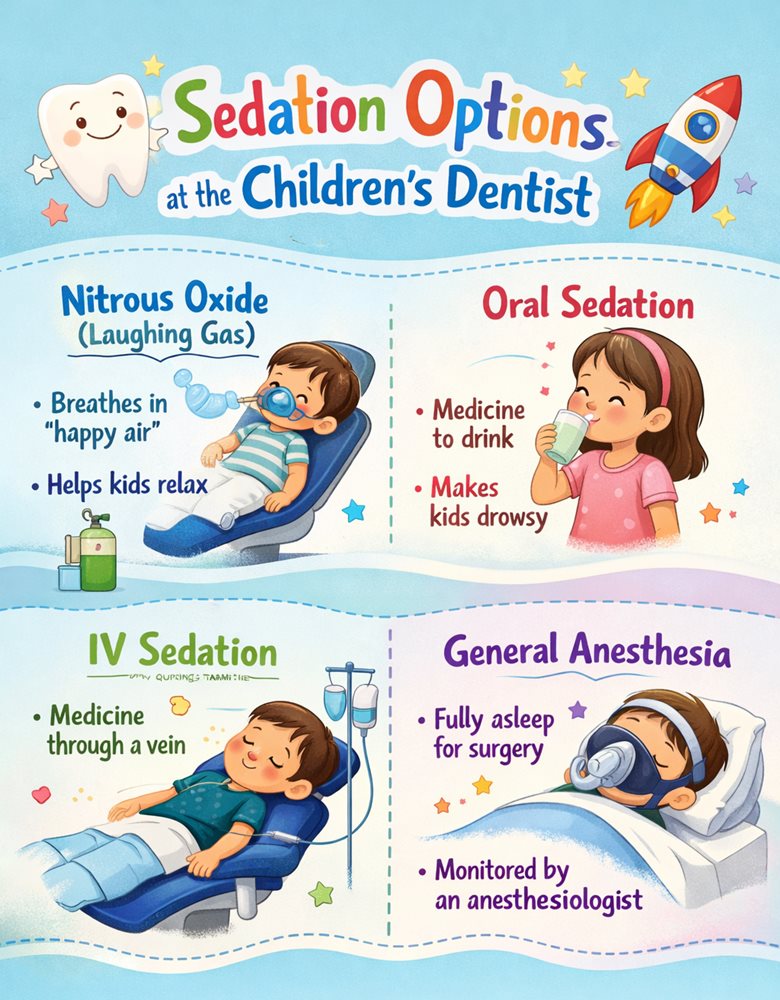
Pediatric sedation dentistry refers to the use of medication that helps children relax during dental treatment. It does not replace local anesthesia but works alongside it to reduce anxiety and discomfort.
Definition and Purpose
Sedation allows children to feel calm and comfortable while dental work is completed. Depending on the method used, children may remain awake but relaxed or become drowsy during treatment.
The goal is always to provide safe, stress-free dental care.
Levels of Sedation Used in Pediatric Dentistry
Different levels of sedation may be used depending on the child’s needs.
Minimal sedation
Children remain awake but relaxed.
Moderate sedation
Children become drowsy and may not remember the procedure.
Deep sedation
Children sleep through the procedure but can still breathe independently.
A qualified Las Vegas pediatric dentist determines which level is appropriate for each child.
Safety Standards Followed by Pediatric Dentists
Safety is always the top priority during sedation procedures. Pediatric dental offices follow strict guidelines that include:
- Monitoring oxygen levels
- Tracking heart rate and breathing
- Using specialized pediatric monitoring equipment
Role of a Las Vegas Pediatric Dentist in Sedation Planning
Before recommending sedation, Dr. Sandra Thompson evaluates several important factors:
- Child’s age and weight
- Medical history and allergies
- Dental treatment needs
- Anxiety level or behavioral challenges
This evaluation helps ensure that sedation is both safe and effective.
Several sedation methods are commonly used in pediatric dentistry. Each option has different benefits depending on the child and the procedure.
Nitrous Oxide (Laughing Gas)
Nitrous oxide sedation is the most commonly used option in pediatric dentistry.
Children breathe a mixture of oxygen and nitrous oxide through a small nose mask. The medication helps them feel calm and relaxed within minutes.
Key advantages include:
- Quick onset of relaxation
- Children remain awake and responsive
- Very fast recovery after treatment
Because recovery is immediate, many children return to normal activities shortly after the appointment.
Oral Conscious Sedation
Oral sedation involves giving a liquid medication before the procedure begins.
This medication makes children feel sleepy and relaxed. Although children remain awake, they may feel very calm and may not remember parts of the procedure.
Oral sedation may be recommended when:
- A child has moderate dental anxiety
- Treatment will take longer
- Nitrous oxide alone may not be sufficient
IV Sedation
IV sedation delivers medication through a vein. This method produces deeper sedation and is often used for more complex dental procedures.
IV sedation may be recommended when:
- A child has severe dental anxiety
- Extensive dental work is required
- Previous attempts with other sedation methods were unsuccessful
This type of sedation requires advanced monitoring and specialized training.
How Pediatric Dentists Choose the Right Sedation Method
Choosing the right sedation option requires careful evaluation. Factors considered include:
- Age and weight of the child
- Duration of dental treatment
- Medical conditions
- Level of dental anxiety
A skilled Las Vegas kids dentist ensures the selected method provides the best balance of comfort and safety.
Safety protocols are essential when sedation is used in dental care.
Pre-Sedation Health Evaluation
Before sedation is recommended, the children’s dentist reviews the child’s complete medical history.
This review includes:
- Current medications
- Allergies
- Previous reactions to sedation
- Breathing or airway conditions
This information helps determine whether sedation is appropriate.
Monitoring During Dental Treatment
During sedation procedures, dental teams carefully monitor the child’s vital signs.
Monitoring equipment tracks:
- Oxygen levels
- Heart rate
- Breathing patterns
Continuous monitoring allows the dental team to respond quickly if adjustments are needed.
Trained Pediatric Dental Teams
Dental teams involved in sedation dentistry receive specialized training. This includes:
- Pediatric sedation protocols
- Emergency preparedness
- Monitoring equipment use
A trained team ensures that every step of the procedure is handled safely.
Why Parents Should Choose an Experienced Las Vegas Kids Dentist
Choosing an experienced Las Vegas pediatric dentist is essential when sedation is involved. Pediatric dental specialists receive additional training focused on children’s health, behavior, and safety.
This expertise allows them to manage sedation safely while maintaining a child-friendly environment.
Proper preparation helps ensure a safe and successful sedation appointment.
Follow Pre-Appointment Instructions Carefully
Your children’s dentist will provide specific instructions before the visit. These may include guidelines about:
- Food and drink before sedation
- Medication schedules
- Arrival times for the appointment
Following these instructions closely is critical for safety.
How Parents Can Reduce Anxiety Before the Visit
Children often take cues from their parents. Staying calm and positive can help reduce anxiety.
Parents can prepare children by:
- Explaining the visit in simple terms
- Avoiding frightening language
- Emphasizing that the dentist helps keep teeth healthy
What Children Should Expect at the Dental Office
Pediatric dental offices are designed to make children feel comfortable. Staff members often explain equipment and procedures in simple, reassuring language.
This supportive environment helps children feel safe during treatment.
Questions Parents Should Ask the Children’s Dentist
Parents may want to ask important questions before sedation, such as:
- Which sedation option is recommended?
- What are the potential risks and benefits?
- How long will recovery take?
Clear communication helps parents feel confident about the treatment plan.
Most children recover quickly after sedation dentistry.
What Parents Can Expect After Treatment
Depending on the sedation method, children may experience:
- Mild drowsiness
- Temporary grogginess
- Slight dizziness
These effects usually fade within a few hours.
Post-Treatment Care at Home
Parents should encourage rest and provide plenty of fluids after the appointment.
Soft foods may be recommended until the child feels fully alert.
When to Contact Your Pediatric Dentist
Although complications are rare, parents should contact their children’s dentist if they notice:
- Persistent vomiting
- Difficulty breathing
- Extreme sleepiness lasting longer than expected
Prompt communication ensures that any concerns are addressed quickly.
Returning to Normal Activities
Many children resume normal activities the same day. However, strenuous activities should usually be avoided until the child fully recovers.
Your Las Vegas pediatric dentist will provide specific recovery instructions.
Sedation is not necessary for every dental visit. However, it can be extremely helpful in certain situations.
Severe Dental Anxiety
Some children experience intense fear that prevents them from cooperating during treatment. Sedation allows dental care to proceed without distress.
Extensive Dental Treatment Needs
When children have multiple cavities or require several procedures, sedation allows treatment to be completed efficiently.
Strong Gag Reflex
A strong gag reflex can make dental procedures difficult. Sedation helps relax muscles and reduce gag reflex sensitivity.
Very Young Children
Young children often lack the ability to stay still for longer treatments. Sedation provides a safe solution.
Children With Special Healthcare Needs
Children with developmental or behavioral challenges may benefit greatly from pediatric sedation dentistry.
Yes. Pediatric sedation dentistry is considered safe when performed by a trained pediatric dentist using proper monitoring and safety protocols.
The duration depends on the sedation method used. Nitrous oxide wears off quickly, while oral or IV sedation may last longer.
Not always. Some sedation methods keep children awake but relaxed. Others may make them drowsy or lightly asleep.
Most dentists recommend soft foods and plenty of fluids after treatment. Avoid heavy meals until your child feels fully alert.
Dental teams use specialized equipment to monitor oxygen levels, heart rate, and breathing throughout the procedure.
Coverage varies by insurance provider and the type of sedation used. Parents should check their dental plan for details.