

Author Name: Dr. Sandra Thompson
Sedation or anesthesia is sometimes recommended to ensure a child’s comfort and safety during a tooth extraction. While local anesthesia can control pain, some children experience significant dental anxiety or fear that makes treatment difficult. Younger children may also struggle to remain still for the length of the procedure, increasing the risk of discomfort or injury. Sedation can help create a calm, relaxed state, allowing the dentist to work efficiently and safely especially during longer or more complex extractions. Children with special healthcare needs or sensory sensitivities may also benefit from additional support to reduce stress. Importantly, not every child requires the same level of anesthesia. Pediatric dentists carefully evaluate each child’s age, emotional readiness, medical history, and treatment complexity to determine the most appropriate option.
Sedation and anesthesia are often used together in conversation, but they serve different purposes in pediatric dental care. Sedation helps a child feel relaxed and less aware of the procedure, reducing anxiety and fear while allowing them to remain responsive. Anesthesia, on the other hand, focuses on pain control by numbing a specific area or, in some cases, creating a deeper state of unconsciousness. A common misconception is that all sedation means “being put to sleep,” which is not the case. Pediatric dentists determine the appropriate level by considering the child’s age, anxiety level, medical history, and the complexity of the extraction to ensure both comfort and safety.
Local anesthesia is the most common and fundamental method of pain control used during pediatric tooth extractions. It works by temporarily numbing the nerves in a specific area of the mouth, preventing pain signals from reaching the brain. For many children especially those who are calm, older, or undergoing a simple extraction local anesthesia alone may be all that is needed. During the procedure, children typically feel pressure or movement but should not feel pain, only numbness in the treated area. Pediatric dentists are specially trained to minimize discomfort when administering local anesthesia by using gentle techniques, topical numbing gels, and slow, careful delivery. Local anesthesia has a long history of safety and effectiveness in children and is carefully dosed based on a child’s age and weight, making it a reliable option for managing pain during dental procedures.
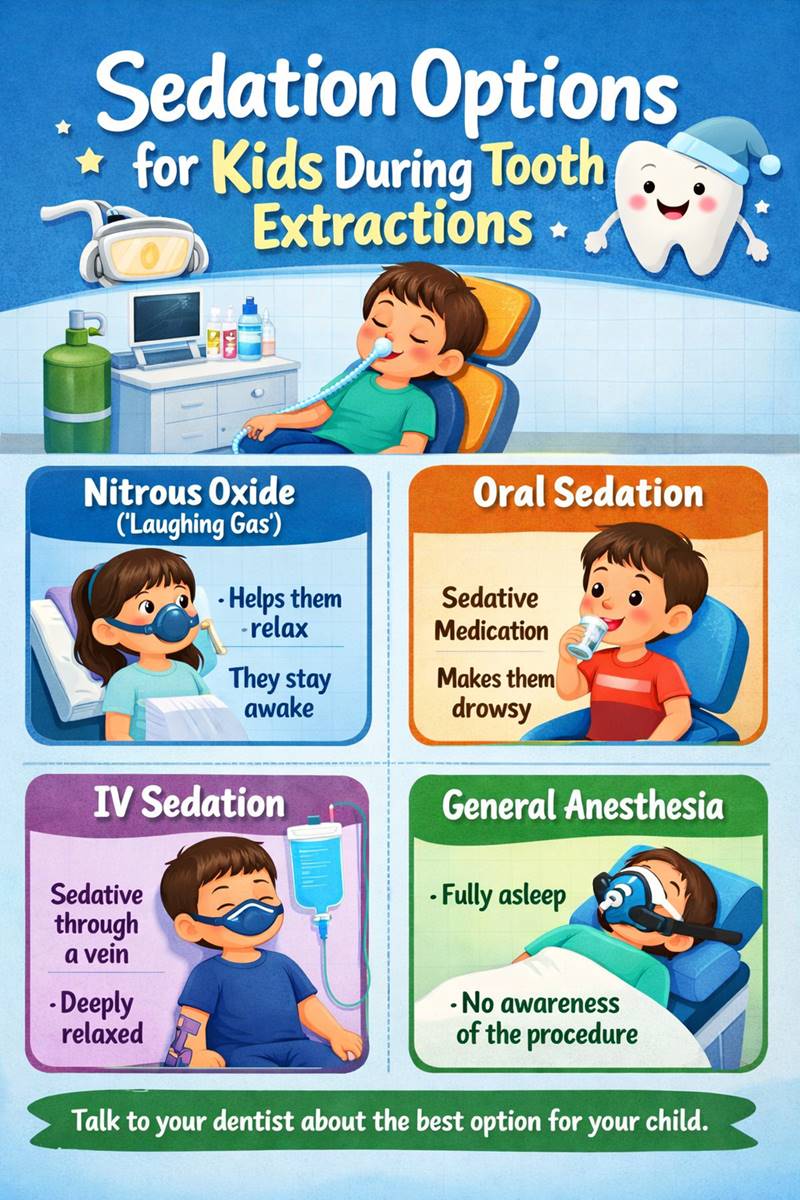
Nitrous oxide, commonly known as “laughing gas,” is a mild form of sedation frequently used in pediatric dentistry to help children relax during tooth extractions. It is inhaled through a small mask placed over the nose and works quickly to create a calm, pleasant feeling while reducing anxiety and sensitivity to discomfort. During treatment, children remain awake, responsive, and able to follow simple instructions, though they often feel light, warm, or slightly giggly. One of the biggest benefits of nitrous oxide is how fast it works and how quickly it wears off once the mask is removed, allowing children to return to normal activities soon after the visit. It is often ideal for children with mild to moderate dental anxiety, strong gag reflexes, or difficulty sitting still. When properly administered and monitored, nitrous oxide is considered very safe for children.
Oral conscious sedation involves giving a child medication by mouth before the tooth extraction to help them feel deeply relaxed. This form of sedation does not put a child fully to sleep, but it significantly reduces anxiety and awareness of the procedure. Children may remain awake yet feel very calm, sleepy, or only partially aware of what is happening. Oral sedation is often recommended for children with moderate dental anxiety, those who have had difficulty cooperating during past visits, or when a longer or more involved extraction is planned. Parents should expect their child to be drowsy and less responsive during treatment, with some children remembering little or none of the procedure afterward. Pediatric dental teams follow strict safety protocols, including careful dosing based on the child’s weight and health history, continuous monitoring, and detailed pre and post-appointment instructions to ensure the child’s safety throughout the visit.
IV sedation involves administering medication directly into a vein to help a child reach a deeper level of relaxation during a tooth extraction. Compared to oral sedation, IV sedation works more quickly and allows the dental team to precisely control the level of sedation throughout the procedure. Children are typically in a semi-conscious state, meaning they are very relaxed, minimally aware of their surroundings, and unlikely to remember the treatment, but they can still respond to gentle prompts if needed. IV sedation may be appropriate for children with significant dental anxiety, strong gag reflexes, special healthcare needs, or when multiple or complex extractions are required. During the procedure, vital signs such as heart rate, breathing, and oxygen levels are continuously monitored by trained professionals. Recovery usually involves a short observation period, with lingering drowsiness expected for several hours after the appointment.
General anesthesia places a child in a fully unconscious state so they are completely unaware of the procedure and feel no pain. In pediatric dentistry, this option is typically reserved for specific situations where other forms of sedation are not sufficient. General anesthesia may be necessary for extensive dental work that would be difficult to complete safely in multiple visits, for very young children who cannot understand or cooperate with treatment, or for children with severe anxiety or special healthcare needs. It is usually performed in a hospital setting or a specialized outpatient surgical center equipped for advanced monitoring. A licensed anesthesiologist or dental anesthesiologist is responsible for administering the anesthesia and closely monitoring the child throughout the procedure. Careful pre-treatment screening, medical history review, and strict safety protocols help ensure that general anesthesia is used only when truly appropriate and as safely as possible.
Pediatric dentists carefully evaluate several factors before recommending a sedation or anesthesia option for a tooth extraction. A child’s age and weight help determine safe medication types and dosages, while their anxiety level and ability to cooperate play a major role in selecting the appropriate level of support. Medical history, including allergies, underlying health conditions, or previous reactions to medications, is also closely reviewed. The complexity and length of the extraction further influence the decision, as more involved procedures may require deeper sedation. Above all, treatment planning is individualized there is no one-size-fits-all approach. Dentists work closely with parents, explaining all available options, addressing concerns, and answering questions. Parental input and informed consent are essential parts of the process, ensuring families feel confident and comfortable with the care their child receives.
Proper preparation helps ensure your child’s sedation or anesthesia experience is safe and smooth. Your dental team will provide specific pre-appointment instructions, including guidelines on eating and drinking, which must be followed closely to reduce risks during sedation. Talk to your child in a calm, reassuring way, using simple and positive language to explain what will happen without sharing unnecessary details that may increase anxiety. On the day of the appointment, bring any required paperwork, comfort items, and be prepared to stay for the entire visit. Following all pre-operative instructions exactly as given is essential, as even small deviations can affect safety or result in the appointment being postponed.
After sedation or anesthesia, it’s normal for children to feel sleepy, groggy, or slightly unsteady for several hours. Some may also experience mild nausea or irritability as the medication wears off. Activity should be limited for the rest of the day, with quiet rest encouraged. Pain can usually be managed at home using dentist-recommended medications and comfort measures. Parents should monitor their child closely and follow all post-care instructions provided by the dental team. Contact the dentist if you notice excessive bleeding, persistent vomiting, fever, or unusual behavior. Follow-up appointments may be scheduled to check healing and ensure your child’s recovery is progressing as expected.
Is dental sedation safe for children?
Yes. When provided by trained pediatric dental professionals and following proper guidelines, dental sedation is considered very safe. Careful screening, accurate dosing, and continuous monitoring help minimize risks.
Will my child be asleep during the extraction?
It depends on the type used. With nitrous oxide or oral sedation, children are usually awake but relaxed. IV sedation causes deeper relaxation, while general anesthesia results in full sleep.
How long does recovery take?
Recovery time varies. Nitrous oxide wears off quickly, often within minutes. Oral or IV sedation may cause drowsiness for several hours, while general anesthesia can require a full day of rest.
Can parents stay during the procedure?
Policies vary by office. Some allow parents to remain nearby, while others may ask parents to wait outside to help children stay calm and focused.