

Author Name: Dr. Sandra Thompson
Key Takeaways
- Early dental exams help detect problems that may require Pediatric Orthodontic Care.
- Changes in bite alignment, crowding, or jaw growth can signal orthodontic concerns.
- A pediatric dentist can identify early signs of orthodontic problems during routine visits.
- Early orthodontic guidance may prevent more complicated treatment later.
- Parents should watch for chewing problems, speech issues, and visible tooth misalignment.
Children’s jaws grow rapidly during the early school years. Teeth must erupt in a balanced pattern so they align properly within the dental arch. If problems develop during this stage, early care can guide growth and improve alignment.
An early orthodontic assessment does not always mean a child will need braces immediately. Instead, dentists evaluate jaw development, tooth eruption patterns, and bite relationships.
Early monitoring allows dentists to identify conditions such as crowding, crossbites, or jaw growth imbalance before they worsen.
The Role of Pediatric Dentists in Orthodontic Screening
Routine dental visits are an ideal time to evaluate tooth positioning and jaw development. A Dentist for children examines how teeth fit together when the child bites and checks whether the upper and lower jaws align correctly.
Pediatric dentists also monitor how baby teeth guide permanent teeth into position. If problems appear during growth, the dentist may recommend monitoring or referral for orthodontic evaluation.
Dr. Sandra Thompson carefully evaluates these developmental patterns during routine visits. Early screening helps ensure children receive timely care when orthodontic problems begin to appear.
Ideal Age for an Orthodontic Evaluation
Many dental professionals recommend an orthodontic evaluation around age seven. By this age, children typically have a mix of primary teeth and permanent teeth, which allows dentists to observe early bite patterns.
At this stage, dentists can detect:
- Crowding in the dental arch
- Early signs of bite misalignment
- Jaw growth patterns that may affect tooth positioning
Early evaluation helps determine whether Pediatric Orthodontic Care may benefit the child during growth.
Orthodontic problems often develop slowly. Parents may notice subtle changes in tooth alignment or chewing patterns before a dentist confirms the issue.
Recognizing these signs early can help families seek professional guidance sooner.
Crowded or Overlapping Teeth
Crowded teeth occur when there is not enough space in the jaw for permanent teeth to erupt properly. This can cause teeth to overlap, rotate, or shift.
Crowding creates several oral health challenges:
- Difficult brushing and flossing
- Increased risk of tooth decay and plaque buildup
- Uneven pressure on teeth and gums
A Providence kids dentist can evaluate whether early orthodontic guidance may help create proper space for incoming teeth.
Early or Late Loss of Baby Teeth
The timing of baby tooth loss plays a significant role in tooth alignment. Baby teeth act as natural placeholders for permanent teeth.
If baby teeth fall out too early or remain too long, permanent teeth may erupt in the wrong position.
This can lead to:
- Crowding and shifting teeth
- Misaligned permanent teeth
- Changes in bite alignment
Monitoring tooth eruption helps dentists determine if early orthodontic care is needed.
Difficulty Biting or Chewing Food
Children with bite problems may struggle when chewing certain foods. Misaligned teeth can cause uneven pressure on the jaw during chewing.
Parents may notice their child:
- Avoiding certain foods
- Chewing primarily on one side
- Complaining of jaw discomfort
These signs may indicate a malocclusion, or improper bite relationship.
Frequent Biting of the Cheeks or Tongue
Misaligned teeth sometimes cause children to accidentally bite their cheeks or tongue during chewing.
This may occur when:
- Teeth are crowded or rotated
- The bite does not align properly
- Jaw growth is uneven
Repeated soft tissue injuries can signal underlying bite issues.
Teeth That Stick Out (Overjet)
When upper front teeth protrude significantly beyond lower teeth, the condition is called overjet.
Protruding teeth are more vulnerable to:
- Sports injuries
- Accidental falls
- Tooth fractures
Early orthodontic evaluation can help determine whether correction is needed to reduce injury risk.
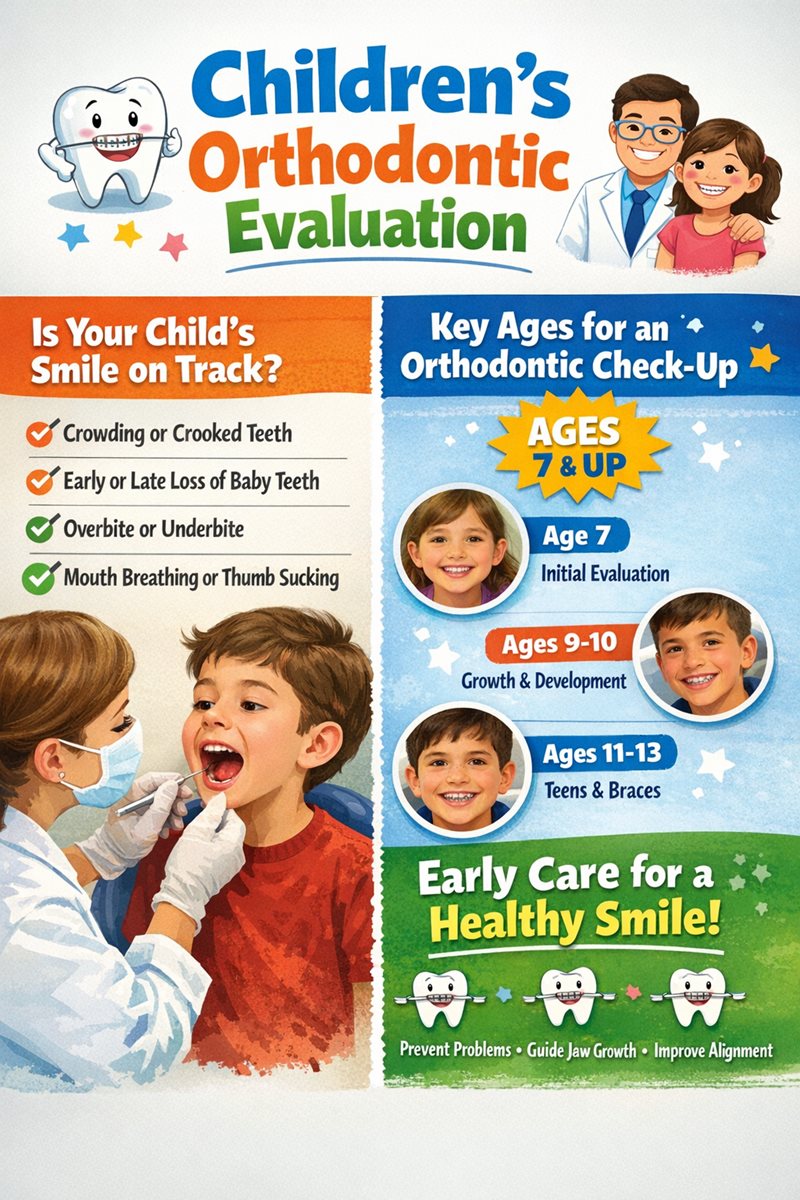
The way upper and lower teeth meet when the mouth closes is known as the bite. When teeth do not align correctly, children may develop a malocclusion.
Certain bite patterns may require orthodontic treatment.
Overbite
An overbite occurs when upper teeth overlap lower teeth excessively. Mild overbites are common, but severe cases may lead to:
- Excess pressure on lower teeth
- Increased wear on enamel
- Jaw discomfort
Early orthodontic guidance may help manage these concerns.
Underbite
An underbite occurs when the lower teeth extend beyond the upper teeth. This condition often relates to jaw growth patterns.
If untreated, underbites can cause:
- Chewing difficulties
- Speech challenges
- Uneven tooth wear
Early evaluation helps dentists determine whether intervention is needed.
Crossbite
A crossbite occurs when upper teeth sit inside lower teeth when the mouth closes.
Crossbites may cause:
- Uneven jaw growth
- Tooth wear on specific teeth
- Shifting of the lower jaw
Early treatment may prevent long-term jaw development issues.
Open Bite
An open bite occurs when the upper and lower front teeth do not touch when the mouth closes.
This condition may affect:
- Speech clarity
- Chewing ability
- Tooth alignment
Open bites are often linked to habits such as thumb sucking or prolonged pacifier use.
Certain childhood habits influence jaw growth and tooth positioning. If these habits continue for too long, they may affect orthodontic development.
Thumb Sucking and Pacifier Use
Thumb sucking is common during infancy. However, prolonged thumb sucking can push front teeth outward and alter bite alignment.
Pacifier use beyond early childhood may have similar effects.
Dentists often recommend limiting these habits as children grow older.
Mouth Breathing
Children who breathe primarily through their mouths may experience changes in jaw development and facial growth.
Mouth breathing can also contribute to:
- Dry mouth
- Increased cavity risk
- Narrow upper jaw development
A Dentist for children may evaluate airway patterns during dental visits.
Tongue Thrusting
Tongue thrusting occurs when the tongue pushes forward against the teeth while swallowing or speaking.
Over time, this pressure can cause:
- Open bite formation
- Tooth movement
- Speech difficulties
Early identification helps dentists guide proper treatment.
Early orthodontic care focuses on guiding jaw growth and tooth development rather than fully correcting alignment.
Several treatment options may be recommended depending on the child’s needs.
Space Maintainers
When a baby tooth is lost early, nearby teeth may shift into the empty space. A space maintainer helps keep the gap open so permanent teeth can erupt correctly.
Palatal Expanders
A palatal expander gently widens the upper jaw. This treatment creates space for incoming permanent teeth and improves bite alignment.
Expanders are most effective during childhood when the jaw bones are still developing.
Partial Braces or Early Orthodontic Appliances
Some children benefit from early appliances designed to correct specific issues such as:
- Severe crowding
- Bite misalignment
- Jaw growth imbalance
These treatments are often shorter than full orthodontic therapy.
Monitoring and Growth Guidance
In some cases, dentists recommend simply monitoring dental development. Regular checkups allow dentists to track tooth eruption and jaw growth before deciding on treatment.
Routine dental exams provide important insight into a child’s oral development. A pediatric dentist evaluates several factors during each visit.
Dental X-Rays and Growth Monitoring
Dental X-rays allow dentists to see developing permanent teeth beneath the gums. These images reveal potential issues such as:
- Impacted teeth
- Missing teeth
- Tooth crowding
Early detection helps dentists plan appropriate care.
Bite and Jaw Development Assessments
A pediatric dentist evaluates how upper and lower teeth fit together when the child bites. This helps identify early signs of malocclusion.
Tracking jaw growth ensures that teeth develop within a balanced bite relationship.
Coordination with Orthodontic Specialists
If orthodontic concerns are identified, the pediatric dentist may recommend consultation with an orthodontic specialist.
Dr. Sandra Thompson helps families understand when orthodontic evaluation may benefit their child. Early collaboration between dental professionals helps ensure the best outcomes for developing smiles.
Parents play an important role in maintaining their child’s oral health and dental development.
Maintaining Strong Oral Hygiene Habits
Children should brush twice daily with fluoride toothpaste and floss once daily. Good hygiene helps prevent tooth decay and gum disease, which can complicate orthodontic care.
Encouraging Healthy Dietary Habits
Limiting sugary snacks and beverages helps reduce the risk of cavities. Balanced nutrition also supports healthy tooth development.
Crunchy fruits and vegetables can help stimulate natural jaw growth.
Scheduling Regular Pediatric Dental Visits
Routine visits with a Providence pediatric dentist allow professionals to monitor tooth eruption and jaw development.
Regular exams ensure that orthodontic concerns are identified early and treated appropriately.
Many children receive their first orthodontic evaluation around age seven. At this stage, dentists can observe jaw growth and bite development.
Yes. A pediatric dentist often identifies early orthodontic concerns during routine exams by evaluating tooth positioning and bite alignment.
Not always. Some mild alignment issues improve naturally as the jaw grows. Dentists monitor development before recommending treatment.
Early treatment can help guide jaw development and tooth eruption. In some cases, this reduces the need for more complex orthodontic procedures later.
The dentist examines the child’s bite alignment, jaw growth, and tooth spacing. X-rays may also be taken to evaluate developing permanent teeth.