

Author Name: Dr. Sandra Thompson
How Desensitizing Toothpaste Differs from Regular Toothpaste
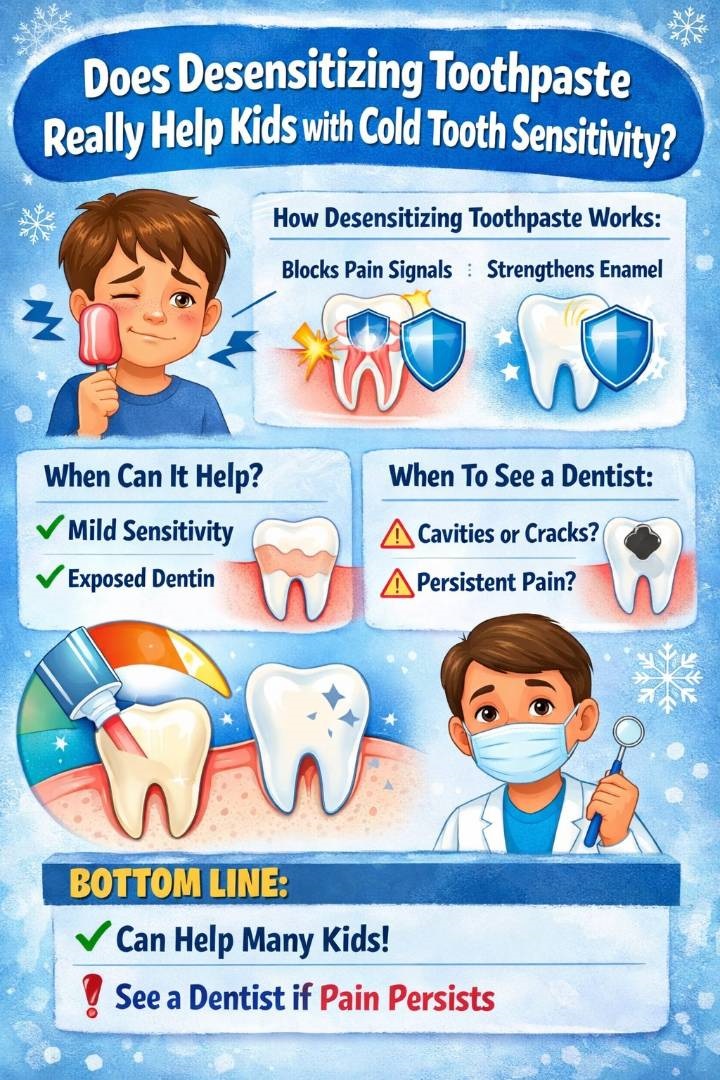
Desensitizing toothpaste is designed with a different goal than regular toothpaste. While standard toothpaste focuses mainly on cleaning teeth, preventing cavities, and freshening breath, desensitizing toothpaste specifically targets tooth sensitivity. For children who feel pain when eating cold foods or drinking chilled beverages, this type of toothpaste adds an extra layer of protection by addressing exposed or reactive areas of the tooth rather than just surface plaque.
Active Ingredients That Block Pain Signals
One of the primary ways desensitizing toothpaste works is by using active ingredients that interfere with pain signals traveling to the tooth’s nerve. These ingredients help reduce the nerve’s response to cold temperatures by calming or blocking the pathways that transmit discomfort. With repeated use, the nerve becomes less reactive, which can significantly reduce sharp or sudden sensitivity sensations in children.
Ingredients That Help Strengthen Enamel
Many desensitizing toothpastes also contain ingredients that support enamel strength. This is especially important for kids, as their enamel is thinner and more vulnerable to wear. Strengthening ingredients help reinforce weakened enamel and seal tiny pathways that allow cold temperatures to reach the inner layers of the tooth. Over time, stronger enamel means better protection against sensitivity and a lower risk of future dental problems.
How Long It Takes to Notice Results
Parents should know that desensitizing toothpaste does not work instantly. In most cases, children begin to notice reduced sensitivity after one to two weeks of consistent use. The toothpaste needs time to build up its protective effect on the teeth and calm nerve responses. Irregular use or frequently switching products can slow down or limit these results.
Why Consistent Use Matters
Consistency is essential for desensitizing toothpaste to be effective. Using it twice daily as part of a regular brushing routine allows the active ingredients to continue blocking pain signals and strengthening enamel. When paired with gentle brushing habits and regular dental checkups, consistent use can make desensitizing toothpaste a helpful tool for managing mild cold tooth sensitivity in children.
Age Considerations for Use
Desensitizing toothpaste is generally recommended for school-aged children who can reliably spit after brushing. Younger children who are still learning proper brushing habits may not be ideal candidates, as they are more likely to swallow toothpaste. Because sensitivity in very young children can also signal developmental or structural dental issues, it’s especially important to speak with a pediatric dentist before starting desensitizing toothpaste in toddlers or preschoolers.
Fluoride Content and Enamel Protection
Most desensitizing toothpastes contain fluoride, which plays a critical role in strengthening enamel and preventing cavities. For children with cold sensitivity, fluoride is often beneficial because it helps reinforce weakened enamel that may be contributing to discomfort. However, fluoride intake should always be age-appropriate. Using the correct amount of toothpaste ensures children receive enamel protection without excessive fluoride exposure.
Proper Amount to Use for Kids
Using the right amount of toothpaste is just as important as choosing the right product. For most children, only a small, pea-sized amount is needed. This provides enough active ingredients to protect enamel and reduce sensitivity while minimizing the risk of swallowing too much toothpaste. More toothpaste does not mean better results and can increase the chance of irritation or unnecessary fluoride ingestion.
Supervision Guidelines for Parents
Parental supervision is essential when children use desensitizing toothpaste. Parents should monitor brushing to ensure kids are not using too much toothpaste, brushing too aggressively, or swallowing the product. Gentle brushing with a soft-bristled toothbrush helps prevent further enamel wear and gum irritation - two common contributors to tooth sensitivity. Supervision also reinforces healthy brushing habits that support long-term oral health.
Why Pediatric Dentist Guidance Matters
While desensitizing toothpaste can help manage mild sensitivity, it should never replace professional dental care. A pediatric dentist can determine whether sensitivity is caused by enamel wear, brushing habits, or a more serious issue such as cavities or tooth damage. Professional guidance ensures that desensitizing toothpaste is being used safely and effectively - and that underlying problems aren’t being overlooked.
Sensitivity Lasting More than a Few Weeks
If your child’s cold tooth sensitivity continues for more than two to three weeks despite consistent use of desensitizing toothpaste and gentle brushing habits, it’s time to schedule a dental visit. Ongoing sensitivity often indicates that the underlying cause goes beyond surface-level enamel irritation. Early-stage cavities, enamel erosion, or subtle tooth damage may be developing quietly, and these issues rarely resolve on their own without professional care.
Pain Interfering With Eating or Brushing
Sensitivity becomes more concerning when it starts to affect daily habits. If your child avoids cold foods, refuses certain drinks, or resists brushing because of discomfort, this signals that the sensitivity is no longer mild. Pain that interferes with eating or oral hygiene can quickly lead to nutritional issues, plaque buildup, and an increased risk of cavities. A pediatric dentist can identify the source of pain and recommend treatment that restores comfort and confidence.
Sensitivity Paired With Visible Tooth Changes
Parents should also seek dental care if sensitivity occurs alongside visible changes in the teeth or gums. These may include discoloration, white or brown spots, chips, cracks, gum redness, or swelling. Even small changes can point to enamel breakdown or decay beneath the surface. A dental exam allows these problems to be diagnosed early, before they progress into more complex and costly treatments.
How Early Diagnosis Prevents Bigger Dental Problems
One of the most important reasons to see a pediatric dentist early is prevention. Tooth sensitivity is often one of the first warning signs of a developing dental issue. When caught early, treatment may be as simple as fluoride therapy, sealants, or minor restorations. Delaying evaluation can allow decay or damage to worsen, increasing the risk of infection, pain, and more invasive procedures later.