

Author Name: Dr. Sandra Thompson
Tooth extractions in children are recommended only when keeping a tooth would put their oral health at risk. Pediatric dentists always consider less invasive options first and recommend extraction only when it is truly necessary.
Severe Tooth Decay or Infection
When tooth decay is extensive or an infection reaches deep into the tooth, treatments like fillings or crowns may no longer be effective. Removing the affected tooth helps eliminate pain, prevent abscesses, and stop the infection from spreading to nearby teeth or the jaw.
Overcrowding and Orthodontic Needs
Some children have crowded mouths with limited space for incoming permanent teeth. In these cases, extracting certain teeth can help guide proper alignment and improve the success of future orthodontic treatment.
Baby Teeth That Don’t Fall Out on Time
If baby teeth remain in place too long, they can block permanent teeth from erupting correctly. Removing these stubborn baby teeth allows permanent teeth to come in properly.
Dental Trauma or Fractures
Teeth that are severely fractured due to falls or injuries may need to be removed if they cannot be repaired, helping protect surrounding teeth and overall oral health.
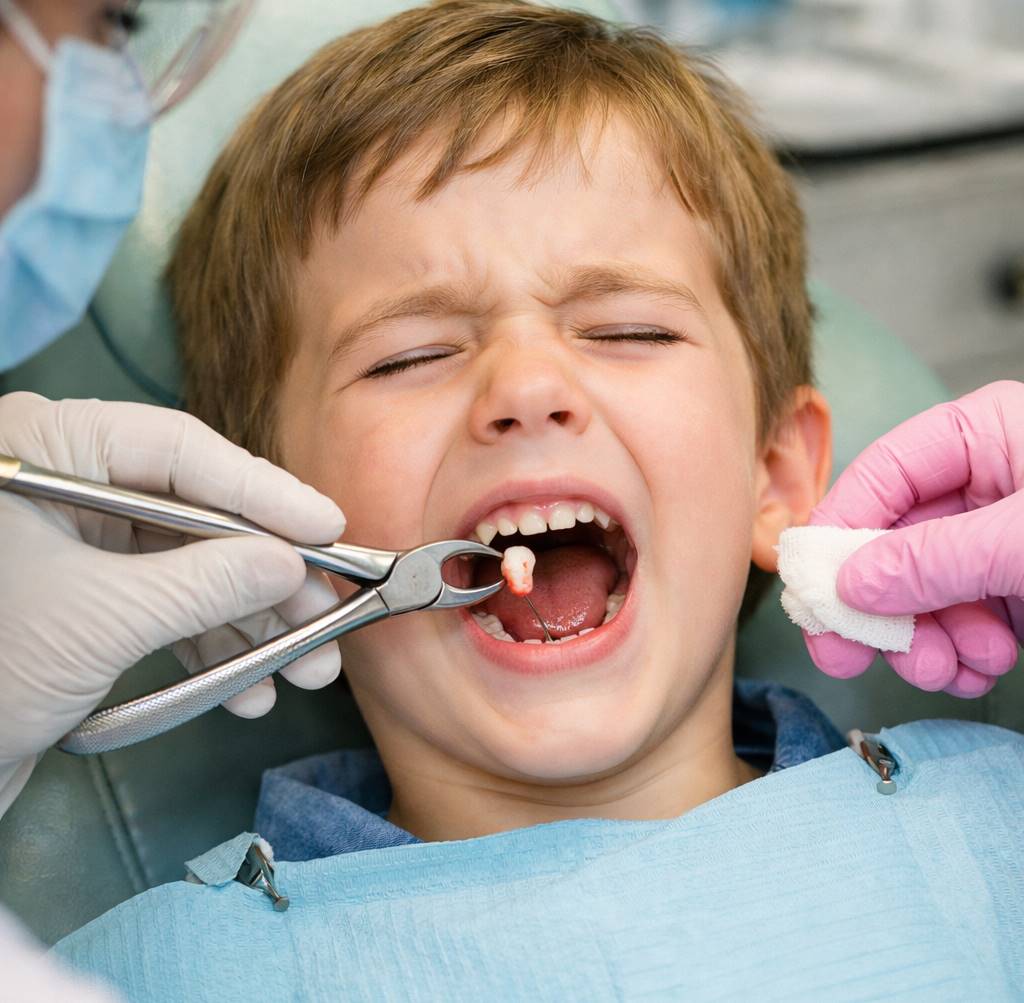
A simple extraction is a routine dental procedure used to remove a tooth that is fully visible above the gumline. This type of extraction is most commonly performed on baby teeth and is considered the least invasive option when a tooth needs to be removed. Pediatric dentists typically recommend a simple extraction when a tooth is loose, has minimal root structure, or can be easily accessed without cutting the gums or bone.
The procedure begins with local anesthesia to numb the area around the tooth, ensuring your child stays comfortable throughout the process. Once the area is numb, the dentist gently loosens the tooth using specialized instruments. When the tooth is sufficiently loosened, it is carefully removed in one smooth motion. The entire process usually takes only a few minutes.
When a Surgical Extraction Is Needed
Surgical extractions are required in situations where the tooth is broken at or below the gumline, making it difficult to grasp. They are also commonly recommended for impacted or partially erupted teeth, as well as teeth with curved, long, or complex root structures. In some cases, severe infection, decay, or damage to the tooth and surrounding bone makes a surgical approach the safest option.
How a Surgical Extraction Is Performed
Unlike a simple extraction, a surgical extraction involves a small incision in the gum to access the tooth. The dentist may gently remove a small amount of bone or section the tooth into smaller pieces to allow for careful removal while protecting nearby tissues.
Safety and Comfort for Children
Although more involved, surgical extractions are safe and carefully managed. With proper anesthesia and pediatric-focused care, children remain comfortable and typically recover well.
Procedure Complexity
Simple extractions involve removing a tooth that is fully visible and easy to access, making them relatively straightforward. Surgical extractions are more complex and are used when the tooth is impacted, broken, or difficult to reach.
Time Required
Simple extractions are usually completed in just a few minutes. Surgical extractions may take longer due to additional steps such as making a small incision or sectioning the tooth.
Healing Expectations
Healing after a simple extraction is typically quick, with minimal discomfort. Surgical extractions may involve slightly more swelling or soreness and require a longer recovery period.
Anesthesia and Sedation
Simple extractions often use local anesthesia alone. Surgical extractions may involve deeper anesthesia or sedation to keep the child comfortable.
Why the Dentist’s Recommendation Matters
The dentist’s choice depends on the tooth’s position and condition. In all cases, the procedure is tailored to the child’s specific needs.
Pediatric dentists take a gentle, child-focused approach to ensure comfort during tooth extractions. Local anesthesia is always used to numb the area and prevent pain during the procedure. When appropriate, sedation options may be offered to help children who are very anxious, young, or undergoing a more complex extraction. Pediatric dental teams are trained to reduce fear by explaining each step in age-appropriate language and creating a calm, reassuring environment.
After a tooth extraction, it is normal for children to experience mild discomfort, slight swelling, and minor bleeding for the first day or two. These symptoms usually improve quickly as the area begins to heal. Most children return to normal activities within 24 hours, although complete healing of the gum tissue may take one to two weeks, depending on the type of extraction.
Tooth extractions in children are generally safe, and most experience only minor, temporary side effects such as mild pain, swelling, or brief bleeding. These symptoms are a normal part of healing. Rare complications can occur, including excessive bleeding, increasing pain, swelling, fever, or signs of infection such as redness or discharge at the extraction site. Delayed healing may also happen if aftercare instructions are not followed closely. This is why it is important for parents to carefully follow all post-extraction care guidelines and contact the dental office if anything seems unusual, ensuring a smooth and safe recovery.
Dentists use a careful evaluation process to decide whether a simple or surgical extraction is the best option for a child. A thorough dental exam and X-rays help determine the tooth’s position, root structure, and relationship to surrounding bone and teeth. The child’s age and ability to cooperate during treatment are also important factors, as these influence comfort and safety. Dentists assess how developed the tooth’s roots are and whether the tooth is fully visible or impacted. Just as importantly, they consider the long-term impact on the child’s oral health, including how the extraction may affect permanent teeth, jaw growth, and future orthodontic needs.
Are extractions safe for children?
Yes. Tooth extractions are a common and safe pediatric dental procedure when performed by trained professionals. Dentists carefully evaluate each child’s needs and use appropriate anesthesia and techniques to ensure safety and comfort.
Will my child need stitches?
Most simple extractions do not require stitches. Surgical extractions may involve stitches, but they are often small and sometimes dissolve on their own.
How long does healing take?
Initial healing usually occurs within a few days. The gums typically heal fully within one to two weeks, depending on the type of extraction.
Will an extracted baby tooth affect permanent teeth?
When properly planned, removing a baby tooth does not harm permanent teeth. In fact, it often helps guide healthy eruption and supports proper jaw development.